
Photo of the Cumberland aground off Ft. Lauderdale
Army Corps of Engineers dredge CUMBERLAND
By Steven Danforth Singer
The seagoing hopper dredge Cumberland (named for area assigned-Cumberland Sound, GA) went aground off Ft. Lauderdale, June 24, 1931 (north end of present-day Galt Ocean Mile), supposedly on a pile of cement jettisoned from another vessel years before, though her remains are in shallow water and could have just as well grounded on the reef there (see photo of vessel aground). She was built in 1902 at Belfast, Maine, 200’ x 40.8’ x 20’, and was the last of the self-propelled, steam-class vessels in use by the Army Corps of Engineers. Deemed not salvageable as her bottom was breaking up, and the fact she was an older vessel, it was then abandoned. The wreck remained visible above water up until WWII, when it was used as target practice by pilots training at the Naval Air Station, Ft. Lauderdale. One of those pilots was former President George H. W. Busch. From the book Shipwrecks of Broward County. by myself and J. Dean, "she left Savannah on June 22, 1931 at 3 p.m. on her way to Key West to refuel and then to Mobile. AL for annual drydocking and repairs. Her Capt. was Joseph M. Lavell, but was under the command of Chief mate A.W. Carter since the captains' Coast Guard License was not endorsed for these waters." On Tues. night June 24th, the Captain came to the bridge and noted the vessel was in shoal water. He ordered the Chief mate to alter course but she eventually went aground at her present resting place. Heavy seas pounded her hull and local Coast Guard attempt to get her off failed. The crew of 50 were taken off that Wednesday, and the next day a Navy tug from Key West arrived, but was also unable to free her as her hull was now damaged and filling with water. Major D.L. Weart, U.S. district engineer arrived on Thursday and "after a quick assessment decided to abandon her both for the safety of the crew that remained and the fact that she had outlived her usefulness and was not worth an expensive salvage operation."
We looked for the wreck in the 80’s, but much of the area was sanded in, and very little visible. Recently in 2021, 24 & again in 25, we re-visited the area and found much of the wreck exposed, scattered over a large area among the reef. See attached photos.
I’ve attached a copy of an article from the newspaper The Republican Journal, of Belfast Maine, dated 8/28/1902, describing the dredge. I’ll presume much was likely salvaged from the wreck prior to WWII. Her wood hull has long since disintegrated or succumbed to the teredo worm. We’re trying to identify some of the scattered remains and hope to produce a site sketch of the site in the near future. A report from 1934 mentioned that a lighted buoy on the wreck had been discontinued, and a new "red special third class Nun buoy" replaced it 4-8/10 miles south of Hillsboro Inlet on 11/2/1934. Much of the wooden hull structure was broken up by rough weather soon after and washed onto the beaches nearby. One local paper noted that the locals welcomed the wreckage as they no longer had to search for driftwood along the shore for building bonfires on the beach which many locals enjoyed. Any new information will be added here.


Article describing the newly built dredge Cumberland from: The Republican Journal, Belfast, ME, 8/28/1902.

CUMBERLAND in dry dock. From book: "Shipwrecks of Florida"
Following photos by Steve Singer. Taken 2021, 2023, &2025 -Just a small sampling of the wreckage. (Check out the video section)

As yet unidentified wreckage in debris field

More scattered wreckage
More scattered wreckage


Ship's ladder on site

Unknown structural piece


Believe a chain plate for mast support

Iron grate

Possible dummy bomb from WWII and diver next to one for scale.


Unidentified machinery piece with numerous bolts.

These last two pix taken 2025 on last visit. Dredge pipe, another large grate.

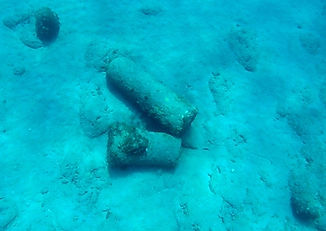

3 photos taken 6/2026. Many more of these unknown objects were found scattered much further east & north of wreck site on 10'+ deeper outer edge of reef and out into the sand, some full length and others half sized. Still no idea what these are or from where.

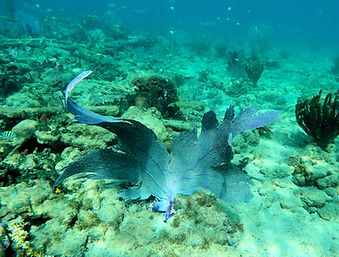
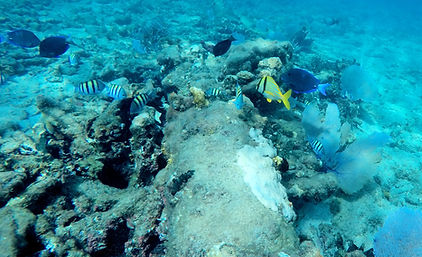
The wreck is home to an abundance of sea life. Photos 2025 & 2026

Photo of the side-drag dredge Delaware showing piping, etc. along the side similar to the Cumberland, so docking was done very carefully. Also added this here as the wreck of the Delaware lies not that far from the Cumberland. It was built in 1905, larger, twin screw, and steel hulled, was decommissioned in 1950 & went under a few other names until becoming the Hydro Atlantic in 1968. She sank off Boca Raton in 1987 while under tow to Texas to be scrapped and is now a popular tech diving site. Photo from book: The Hopper Dredge, Edited by F. Scheffauer, Army Corps of Engineers, U.S. Govt. Printing Office, 1954.
© 2026 by Anchorexplorations.com. Proudly created with Wix.com